Venetian plaster or limewash: what’s the difference?
In short
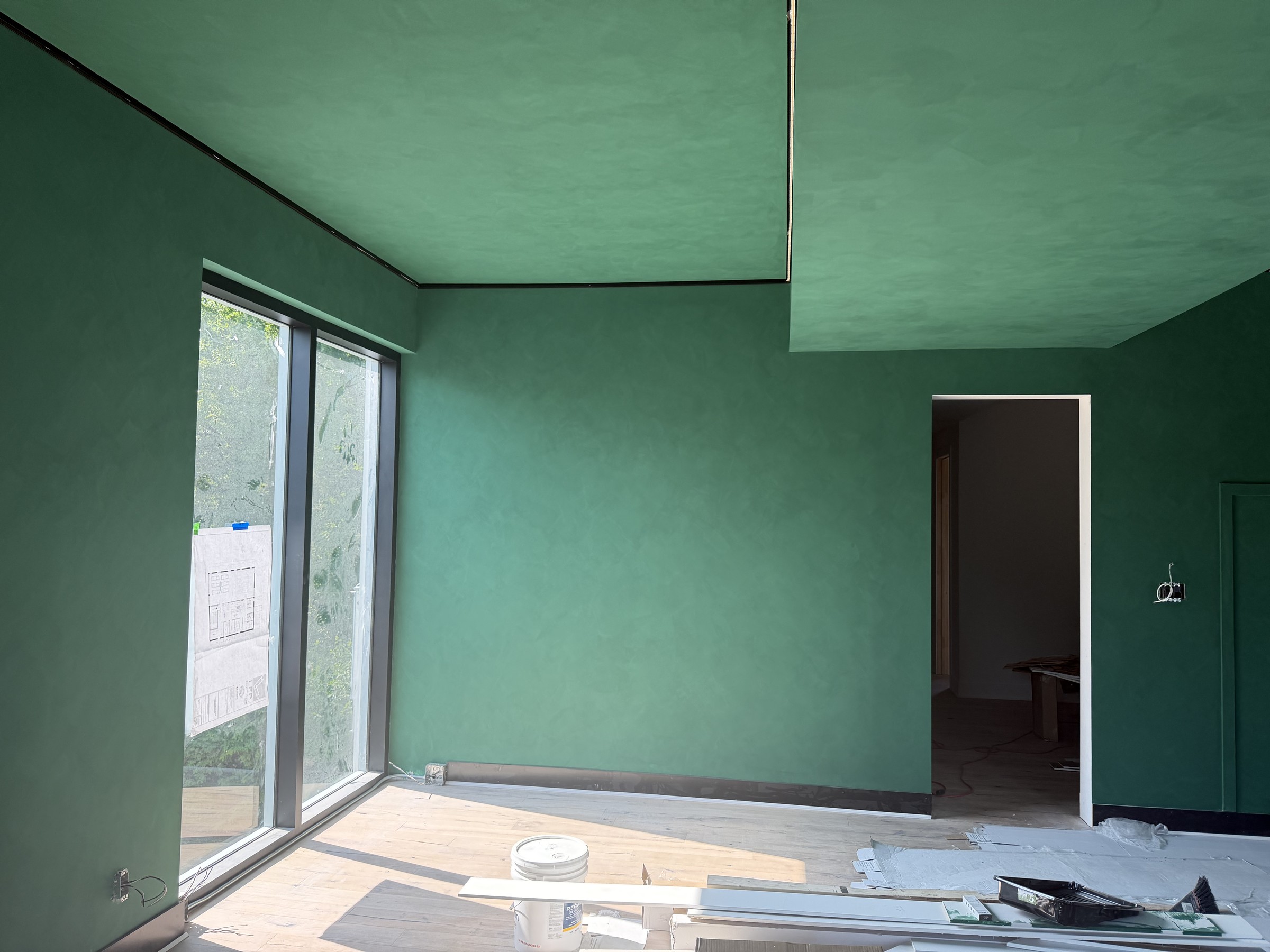
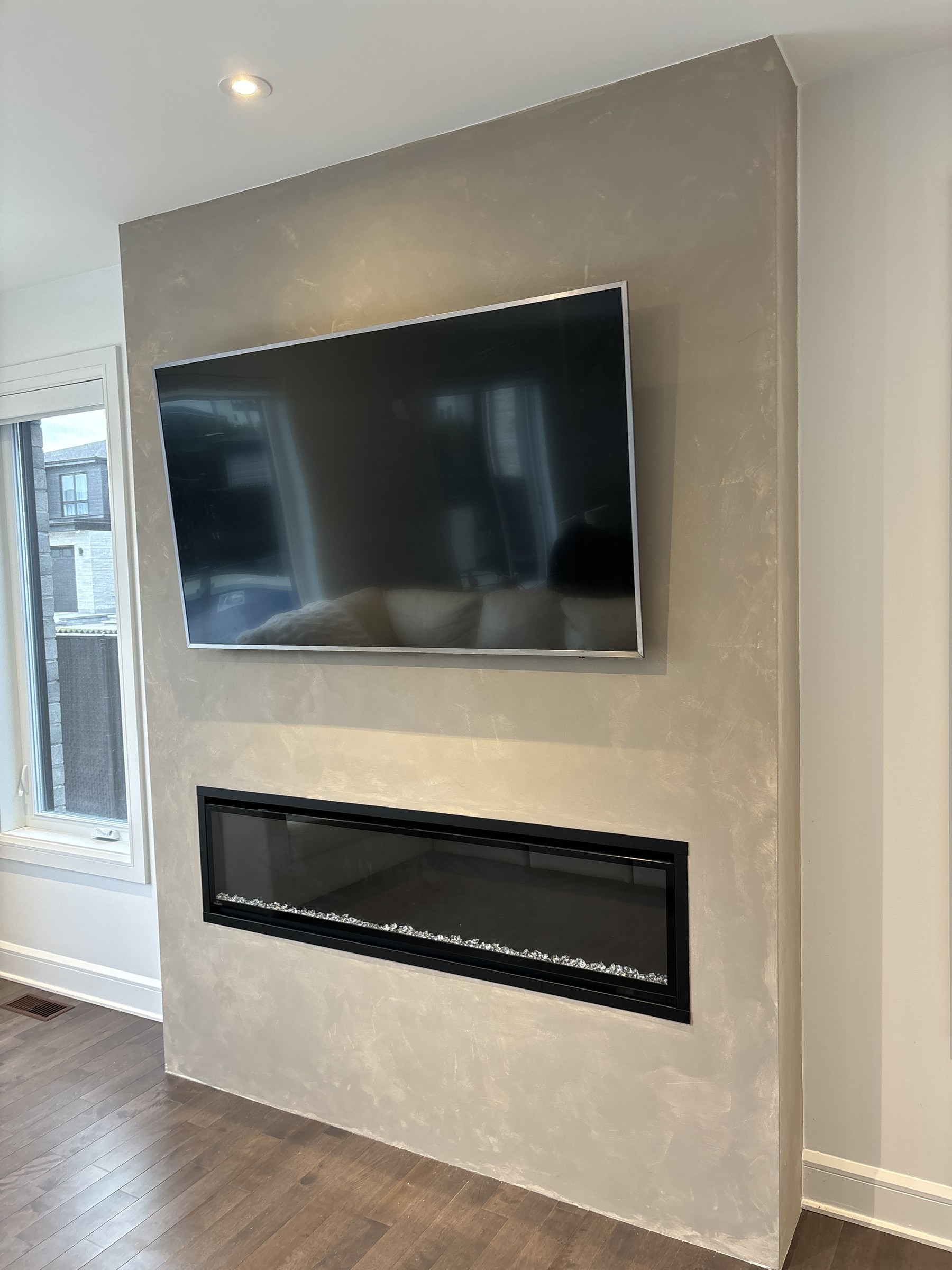
Venetian plaster, or stucco, is a mix of slaked lime and marble dust applied with a trowel in very thin coats, then smoothed to a finish that imitates marble. Limewash is a lime paint applied with a brush: it dries matte, with a cloudy look that shifts with the light.
By the DV Groupe team · Updated · 2 min read
01
Two lime finishes, two effects
Venetian plaster
Slaked lime and marble dust (OQLF)
Applied with a Venetian trowel in very thin coats
Can turn very glossy once waxed
For interiors, on a smooth mineral base
Limewash
A lime-based paint, applied with a brush
Matte, cloudy finish that moves with the light
The surface can’t be wiped clean
Dries about four shades lighter than when wet
Venetian plaster: OQLF and Kreidezeit’s fine stucco plaster sheet. Limewash: Portola’s Lime Wash data sheet.
02
What they share: lime
Both finishes are built on lime, and that is where their depth comes from. Both let water vapour through: Kreidezeit measures it for its stucco plaster, and Portola describes its limewash as highly breathable.
Lime is also very alkaline. Kreidezeit says its plaster naturally resists mould thanks to a pH above 12.5, which makes it suitable for humid rooms; Portola describes its limewash as a mild fungicide.
03
Which one to choose
A wall that catches the light
Venetian plaster, smoothed then waxed, gives a finish close to polished stone.
A soft, matte effect
Limewash gives a cloudy look, almost suede-like indoors.
A wall that gets touched a lot
Think about it for an entrance or a kitchen: limewash can’t be wiped clean.
Walls already painted in latex
Kreidezeit lists latex paints among the bases that don’t suit its stucco: the wall has to be prepared first.
Common questions
What exactly is Venetian plaster?
A stucco: according to the Office québécois de la langue française, a coating made from a mix of marble dust and slaked lime that imitates marble or stone.
Can Venetian plaster go in a bathroom?
Kreidezeit says its stucco plaster naturally resists mould and can be used in humid rooms, and that it becomes water-repellent once treated with its smoothing soap.
Can limewash be washed?
No. Portola’s data sheet says a limewash surface can’t be wiped, which matters in an entrance or a kitchen.